
ANU students, Associate Professor Matthew Zagor (ANU Law School), and Associate Professor Dr Heather Roberts (ANU Law School) with the Oonchiumpa team
“Through this course, I came to understand that law is not merely an application of rules, a series of doctrines and statutes … it is woven into the land under my feet and the stars above my head.”
– Adelaide Hayes, 2025 cohort
Legal Education for True Justice: Indigenous Perspectives and Deep Listening on Country is a semester-long immersive course that redefines what it means to study law in Australia.
Originally co-designed by Oonchiumpa Consultancy Services (Oonchiumpa) and the ANU Law School’s Honorary Associate Professor Dr Anthony Hopkins (now Judge Hopkins NT Local Court) and Distinguished Professor Asmi Wood, the course is now convened by Associate Professor Dr Heather Roberts, and has been transforming ANU law students since 2022.
The course is centred around the practice of ‘deep listening’ to both people and Country with sincerity and humility. Engaging in reflection circles, cultural protocols, and communal storytelling allowed us to grapple with questions of true justice, sovereignty, and relational accountability.
We begin and end in the classroom, but the heart of the course is a week-long immersion experience in the Central Desert, which in 2025 took place on Arrernte Country. We visited Amoonguna, Atnarpa and Ltyentye Apurte, listening to the stories of how lives are affected by law and policy, and seeing how communities continue to practice self-determination despite institutional barriers.
Beginning in Mbantua/Mparntwe (Alice Springs), we met with Elders, Aboriginal community leaders, legal professionals, local judges, and community prison support officers. We learnt about Aboriginal lore, governance, kinship systems, history and community-based justice.
Where Law meets Lore: The program’s foundation
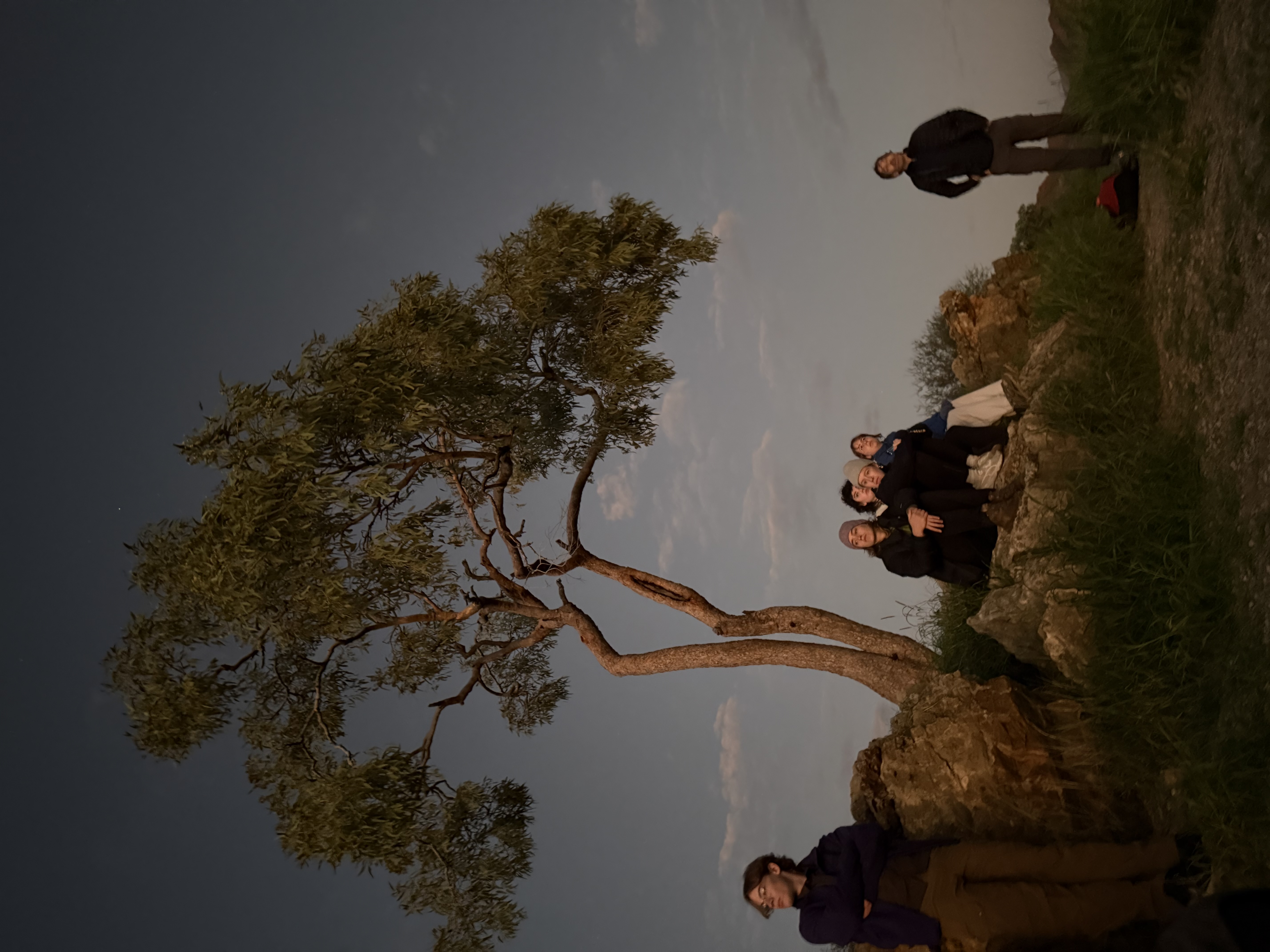
This year marked the third year of the True Justice on-Country experience run by Oonchiumpa, having been originally delivered by Tanya Turner and Kristy Bloomfield through the North Australian Aboriginal Justice Agency (NAAJA).
The course was born from a groundbreaking partnership with the ANU, who took on the role as the listening institution being led by and responding to the voices of Aboriginal and Torres Strait Islander peoples.
“The concept is born from the idea that law school can only teach you what is written, whereas Aboriginal lore and Aboriginal experiences of law are seen, felt and heard by the people it impacts most. The only true way to understand this is to be with the people and listen deeply to their stories and the impacts in their community. To understand the impact of law and justice, but to also hear the stories of resilience.” – Oonchiumpa
Tanya is an Eastern Arrernte woman from Central Australia, and Kristy is a Central Arrernte, Eastern Arrernte and Alyawarra woman, and Traditional Owner of Mbantua Alice Springs and Loves Creek Station. Kristy and her family, together with Tanya, established Oonchiumpa to support and mentor at-risk young people in Central Australia from a perspective of cultural authority and leadership as Traditional Owners.
Both have extensive experience in the legal sector: Kristy worked on the Royal Commission into the Protection and Detention of Children in the Northern Territory and represented NAAJA at the United Nations Pre-session for the Committee for the Rights of the Child; Tanya has worked at the Federal Circuit and Family Court of Australia, and coordinated the National Indigenous Legal Conference. Their vision for the course extends far beyond legal education itself.
“At the centre of what we do is the knowledge that law students who visit us from ANU will one day become the leaders in their own lives and leaders in their working world ... who will remember the experience that they had with us, the stories they heard, and the impact it had on them, and use that to be our allies and make positive change in our world from theirs.” – Oonchiumpa

“I was privileged to convene the course from 2022 to 2024 and witness the way it transformed students, opening them to their potential as First Nations Justice leaders and allies of the future. Looking back now I am even more persuaded that First Nations led justice education … is the path towards true justice for all of us. I know from the experience of those students who have graduated that the potential is already being realised.” – Honorary Associate Professor, Dr Anthony Hopkins, Judge of the Local Court of the Northern Territory
Changed perspectives: reflections from the course and its lasting impact
Embarking on the course, we expected our learning to come through instruction. Instead, we learned through feeling – feeling in community, in connection, and in the unspoken.
Observing the Local Court, we witnessed how systems reduce a person's story and immemorial history to fit colonial moulds of ‘justice’. In contrast, Arrernte lore showed strength and resistance. Faced with this dissonance, it became clear that the adversarial system cannot accommodate the connections needed for systemic change, and that colonial structures are not relics of the past but living forces that continue to distort ‘justice’ today.
“An academic understanding of the issues facing our people cannot capture the strength and grace our community continues to demonstrate. Any understanding of these struggles must come from firsthand engagement. The on-country course redoubled my commitment to practicing law on behalf of my people …” – Jye Cole Hopkins, Luritja and Warumungu student, 2024 cohort
This process of unlearning enabled many of us to shift our priorities in law, more deeply understand our own connections to history, and appreciate the responsibility we share going forward in the pursuit of true justice.
“I now feel a strong ambition to pursue a career in criminal defence, seeking justice through empathy, cultural humility, and meaningful systemic change.” – Isabelle Homan Corless, 2025 cohort

The program accommodates 16 students, however applications consistently exceed available positions, reflecting the demand for a legal education which honours Aboriginal and Torres Strait Islander perspectives and pedagogies. This demand is for a law degree that equips students to not only practice law, but to take an active part in transforming it.
Law graduates who recognise the primacy of Aboriginal and Torres Strait Islander voices are a prerequisite for this transformation. The True Justice course co-designed by Oonchiumpa and the ANU Law School is an investment in student’s transformative capacity; providing the next generation of lawyers, policy makers and academics with the skills to both engage with and critique the law– as a set of rules, and as a vehicle for true justice
“I learnt to listen as Country does, without expectation or preconceived ideas. The course’s lessons on listening, empathy and storytelling continue… to shape every part of my work. They’re universal skills that create connection and real change in all professional and personal settings.” – Sophia Murray-Walker, 2022 cohort