Participants of the discussions, from left to right: Sophia Brook (Konrad Adenauer Stiftung), Professor Christian Leuprecht (Queen's University, Canada), Tom Keatinge (Director, Centre for Finance and Security, Royal United Services Institute, UK), Professor Thomas Biersteker (Graduate Institute, Geneva), Claudine Lamond (Senior Manager, Grant Thornton, Australia), Professor Clara Portela (University of Valencia, Spain) and Associate Professor Anton Moiseienko (Australian National University). Image supplied.
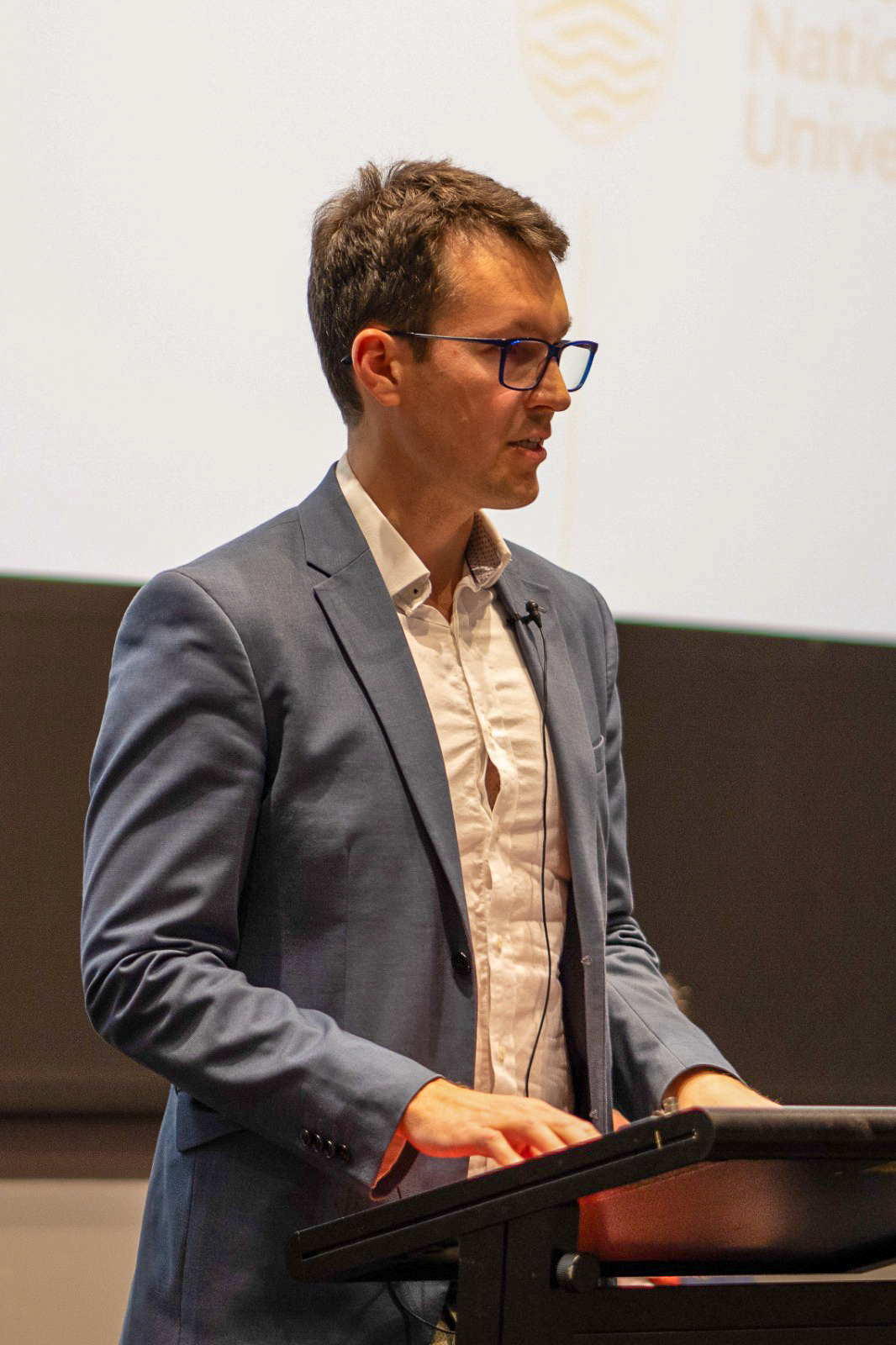
The ANU Law School hosted a series of discussions on sanctions as a tool of economic statecraft from 29 to 31 July, bringing together leading academics and practitioners in international sanctions, anti-money laundering and counter-terrorist financing from Australia and around the world.
This initiative was spearheaded by Associate Professor Anton Moiseienko in collaboration with the Konrad Adenauer Stiftung (KAS), Germany. This week of discussions also contributed to the Australian Research Council Discovery Project led by Associate Professor Moiseienko, Enforcing financial sanctions: Strengthening Australia's ability to freeze sanctioned assets. The project aims to address the significant knowledge gap regarding the mechanisms and practical challenges involved in enforcing sanctions.
“It was terrific to have the opportunity to bring leading international and domestic experts for a packed program of sanctions discussions,” Associate Professor Moiseienko said.
“Canberra is a particularly appropriate place to host them as Australia is one of the several emerging sanctions powers that needs to consider how it best uses its economic statecraft capabilities.”
The weeklong program included a workshop on the current challenges and opportunities for Australia, Canada, the EU, the UK and other like-minded Western democracies to deploy and enforce economic sanctions effectively.
Representatives from multiple Australian government departments, foreign embassies and private-sector institutions, including banks and consultancies, contributed perspectives on the contemporary sanctions landscape.
One participant, Kylie Oliver, Senior Manager Enterprise Sanctions Compliance at ANZ Bank, said the workshop demonstrated the importance of bringing together different perspectives.
“These engagements highlighted the value of strong public-private partnerships, where government, industry, and academia come together to translate research, scholarship, and real-world operational experience into practical policy outcomes,” she said.
“They also demonstrated how collaboration across these sectors can help shape policy development, strengthen collective capability, and support more effective and resilient outcomes.”
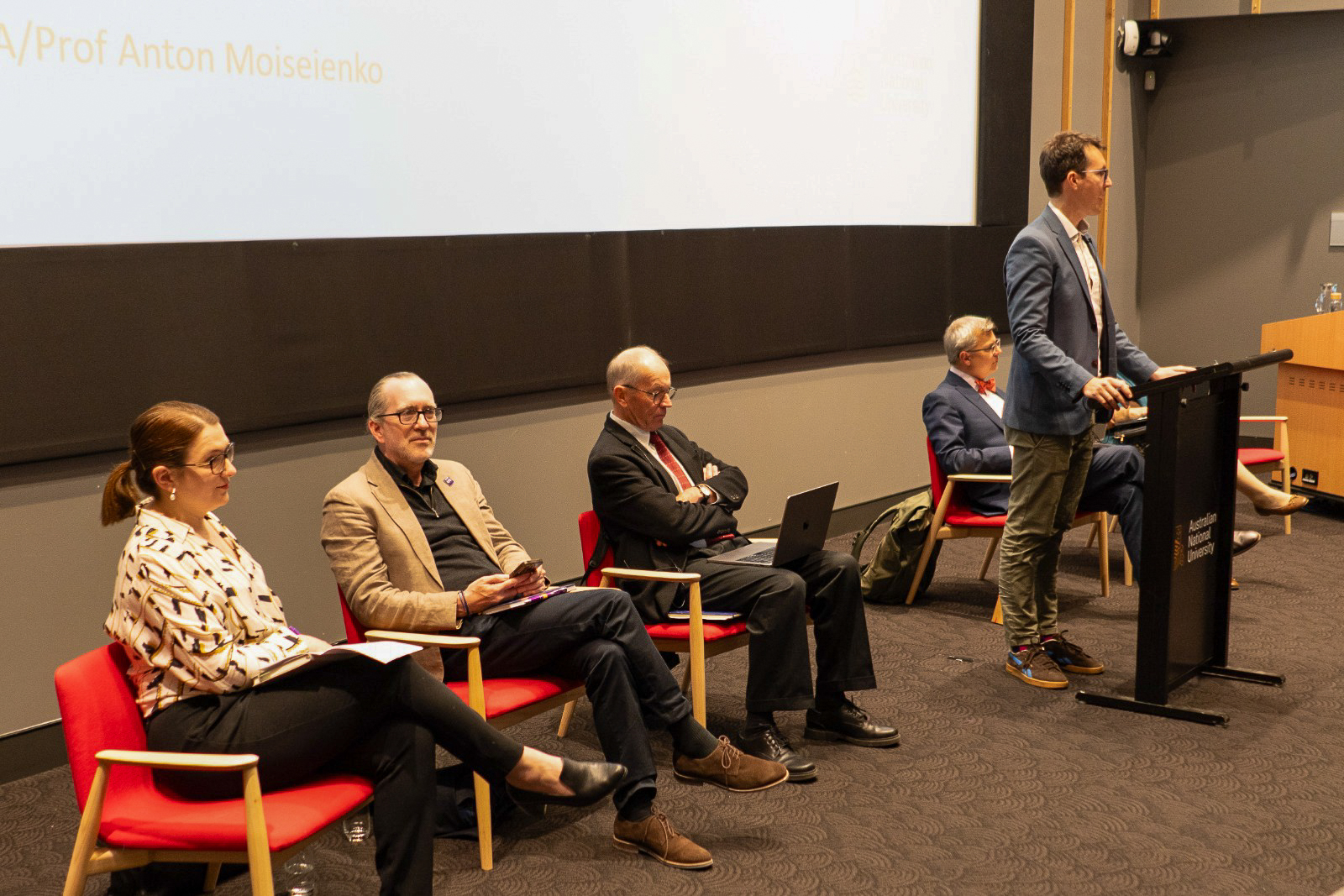
The workshop formed part of the ongoing Canberra Financial Crime seminar series, which is co-convened by Associate Professor Moiseienko and Dr Jamie Ferrill from Charles Sturt University.
“The seminar series brings practitioners and academics together with the goal of building an economic security community, where operational insight shapes research, and current research reaches the practitioners applying it,” Dr Ferrill said.
“These are the conversations that work to shape Australia's economic security.”
The week’s activities culminated in the ANU Economic Statecraft Lecture: The future of international sanctions, which featured a keynote address from Professor Biersteker and panel contributions from leading international scholars and practitioners.
Together, the week highlighted the importance of collaboration between academics, policymakers and industry in strengthening Australia’s approach to sanctions and economic security.
“The lecture was a great end to the week, and the level of attendance and engagement on a Friday night was testimony to the interest that it generated,” remarked Associate Professor Moiseienko.