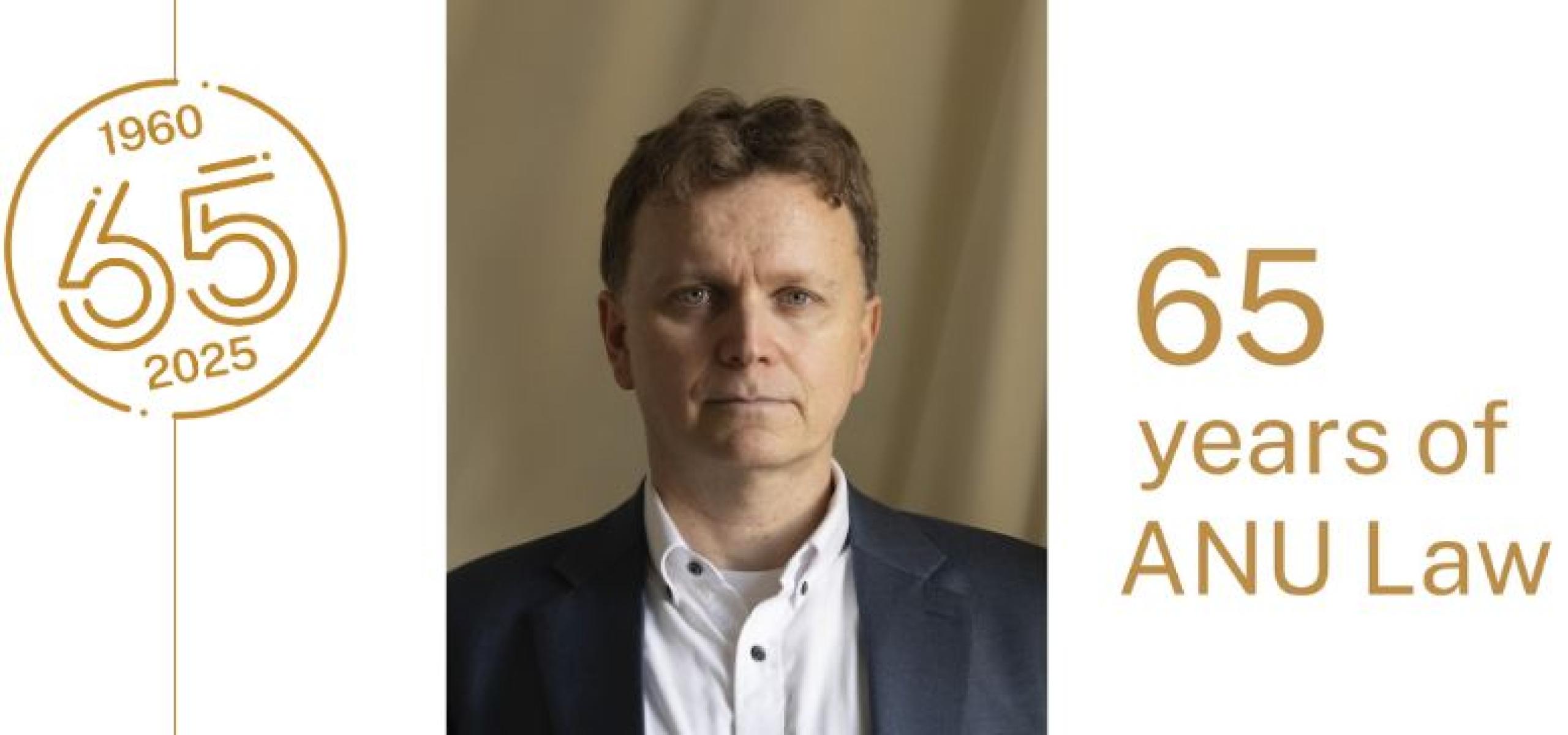
Based in Switzerland, Paul Dziatkowiec is a 2025 Alum of the Year Finalist and Director of Mediation and Peace Support at the Geneva Centre for Security Policy. An Australian diplomat turned global peace leader, he has 25 years’ experience mediating armed conflicts worldwide, mentoring leaders, and advancing humanitarian diplomacy.
Q: You completed a Masters in International Law in 2005. Why did you choose to study at ANU Law School and what made you interested in international law and human rights law?
A: It was a combination of factors. I was a fresh young recruit, just 22 years old, in the diplomatic service and wanted to be the best I could be; which meant broadening my skills and qualifications, and arming myself with a sound knowledge of international law, which is one of the core pillars of diplomatic work in many settings (particularly the multilateral environment). Secondly, I was from a young age moved and appalled by armed conflict, and wanted to understand what legal frameworks existed to prevent it, to manage it, and to address its worst consequences. And finally, of course ANU was, and is, one of the best universities in Australia, so there were the reputation of the school and the institution that also made a compelling case.
Q: How does your knowledge in international law equip you in mediation and diplomacy?
A: Even in the most vicious wars, the conduct of the combatants is governed by agreed principles of international law. There are acts and behaviours that contravene universally accepted norms, and the parties to the conflict should be aware of what these are. As a mediator, your job may not be to publicly lobby or condemn either side, but I think you ought to firmly bring these standards to their attention, in an effort to help avert the worst excesses of war, which is always shockingly harmful and destructive on all sides.
In order to have these difficult conversations and be perceived as credible and authoritative, you need a solid grounding in relevant international law – not least because, frankly, the conflict parties are always looking for a chink in your armour. Of course, it takes a lot more than that to be an acceptable mediator to both sides – you need to be perceived as sincere, impartial, and genuinely committed to a joint outcome. But certainly, the substantive credibility is a critical part too!
As for diplomacy more generally, it goes without saying that in order to understand how states relate to each other, what they agree and are expected to do, and how their behaviour is regulated, an in-depth knowledge of international law is indispensable.
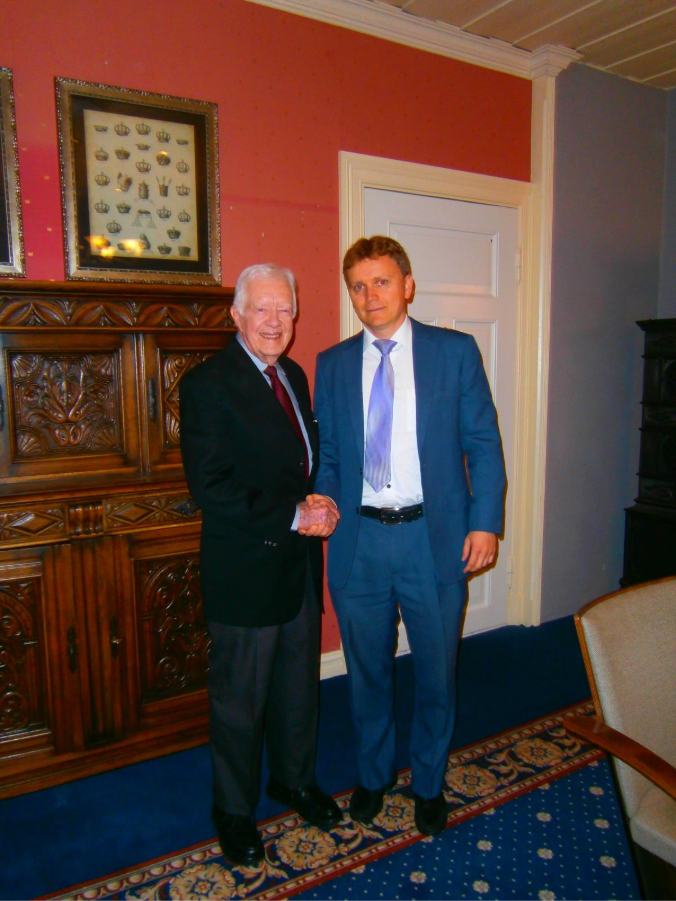
Paul Dziatkowiec with Jimmy Carter 2014, photo provided by Paul Dziatkowiec
Q: Reflecting on your time at Law School, what were some of your highlights?
A: What I value most is seeing the practical application – whether in diplomacy or in conflict mediation – of the theories, principles and models I picked up in law school. These are the times when you realise what it was all for. Sometimes it is in the most unlikely of settings – perhaps a tense shouting match in a rundown hotel somewhere on the neutral peripheries of a conflict – that I think back to an ANU course (and even the specific lecturer!) where I first encountered the topic being discussed.
Naturally I also have fond memories of the beautiful campus in the centre of Canberra, playing pool or attending concerts in the refectory, the high calibre of the legal faculty members (some of whom have gone on to very senior international positions) and, in general, the stimulating intellectual environment and exposure to real policy questions.
Q: You've accomplished so much, as the current Director of Mediation and Peace Support at the Geneva Centre for Security Policy, and have led peace initiatives across Ukraine, the Middle East, Caucasus, Asia, Africa, the Arctic, and the US-China context. How did the Law School equip you for these accomplishments?
A: Most importantly, ANU Law School gave me skills, frameworks, and principles to help me think through problems. Sadly, nothing you learn at any university prepares you for all the scenarios you might see in a war environment, some of which can be serious shocks to the system, even emotionally distressing. However, the knowledge and the skills I picked up in ANU Law School have helped me to place things into a frame of reference and to adapt, even to situations I have not anticipated.
Justice is the bedrock of durable peace. Violent conflict often traces back to, and is fuelled by, a sense of grievance, a perceived or real abuse of rights or dignity, a feeling on one or both sides that fairness and due process are unattainable through peaceful means. Accordingly, in trying to solve violent conflict, it follows that solutions that are most likely to last are those that not only stop the fighting and the bloodshed in the immediate term, but that also bring a sense of justice, of real acknowledgment and some sort of redress. If not, they can fester and then reignite later on. Quick fixes rarely stick.
The international law degree not only helped to give me the tools to play in the diplomatic game, but also the principles and the vocabulary to know how to articulate a proposal, a possible outcome, a peace strategy and a mutually acceptable methodology – whether to a diplomatic ally or adversary, a multilateral negotiation in the UN (where the objective was to rally multiple states around Australia’s approach), or to rival battle-hardened, sceptical and impatient belligerents.
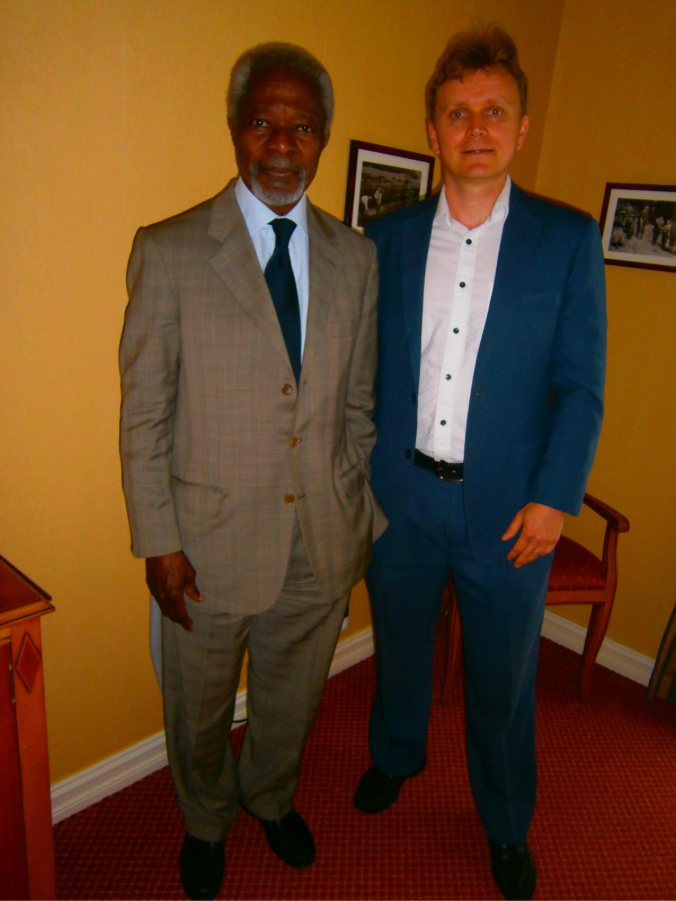
Paul Dziatkowiec with Kofi Annan, photo provided by Paul Dziatkowiec
Q: What advice would you give someone thinking about studying at Law School? Is there anything you wish you had known before starting?
A: I can only encourage people interested in a career in international affairs or diplomacy to consider ANU and its Law School as a place to investigate, expand and cultivate that interest. It provides a strong basis of knowledge, as well as a relevant set of skills and connections, to prepare for a career in diplomacy, think tanks, academia, civil society, peace mediation, and various other fields.
In short, completing an international law degree opens up a number of options – though of course, there are other key ingredients beyond the study, including determination, patience and open-mindedness! Related to the latter point, if I can offer any other advice it is to be curious and ready to explore – the route is not always linear, but the digressions can be just as rewarding and fun!
Q: Is there anything else you would like to share? A thank you, shout-out, or final reflection?
A: ANU is a place where exciting journeys begin, and I thank the University and ANU Law School for being an inspiration and a laboratory when I was first setting off on mine. And a big congratulations to ANU Law School on this important anniversary!
Read ANU Law School's 65 year of history, and other alumni spotlights, Jennifer Robinson and Heidi Yates >>